
Public anthropology happens when anthropologists engage with public issues and problems rather than just pursuing discipline-specific endeavors.
As Rob Borofsky writes in Public Anthropology – A Personal Perspective, this approach to anthropology addresses:
important social concerns in an engaging, non-academic manner. Public, in this sense, contrasted with traditional academic styles of presentation and definition of problems… The only way to be taken seriously by the broader public, I am suggesting, is to ask the questions readers beyond the academic pale ask, to answer the questions these readers long to know, to share experiences that add insight and meaning.
Rob Borofsky has been one of the leaders in public anthropology, having founded the Center for a Public Anthropology and serving as editor for the series in Public Anthropology at the University of California Press.
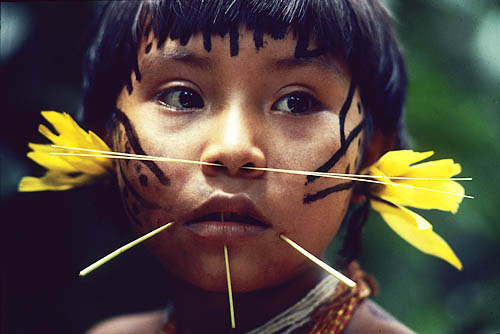
Many prominent books have come out of the UC Press series. Paul Farmer’s Pathologies of Power: Health, Human Rights, and the New War on the Poor is the best-known. Carolyn Nordstrom recently published Global Outlaws: Crime, Money, and Power in the Contemporary World (for a taste, see this video of Nordstrom “Fighting for a Healthy Global Economy”). Rob Borofsky himself put together Yanomami: The Fierce Controversy and What We Can Learn From It. The latest is Righteous Dope Fiend by Phillippe Bourgois.
Public Anthropology and the University of California Press host an annual competition for new manuscripts in public anthropology [this is actually the 2009 call here], one aimed at graduate students and the other for scholars more broadly. Here’s Cat Bolton, the latest graduate winner and an incoming faculty here at Notre Dame, encouraging you to submit:
 Neuroanthropology