Let’s look at the statistics: “Research found alcohol use depicted in 92 percent of the films in a sample of 601 contemporary movies… Alcohol was used in 52 percent of G-rated films, 89 percent for PG, 93 percent for PG-13 and 95 percent for R”
The stone-cold-sober fact? Alcohol is everywhere in films and it shapes the consumption of alcohol by viewers. A 2008 study concluded that each year the average US adolescent (ages 10-14) was exposed to “5.6 hours of movie alcohol use and 243.8 alcohol brand appearances in the top 100 US box office films from 1998-2002.”
Beyond exposure, the magnetism of a drinking character can influence viewers. “Health educators and policymakers are alerted to the fact that the entertainment media too often portray glamorous characters as enjoying alcoholic beverages without facing negative consequences, which may particularly affect the viewers who feel attracted to the role characters.”
Hollywood cinema can be magical, with scenes that seduce the viewer and tattoo memory to mind. These mystical moments generally glamorize alcohol. Drinkers are frequently depicted in films as more attractive, more aggressive, more romantically/sexually active, and as having a higher socioeconomic status than nondrinkers.
In contrast, Hollywood alcoholics are regularly depicted as hopeless, broken deadbeats, chugging down whiskey while their lives crumble around them. Thus, the movie industry portrays the two polar extremes of alcohol use – glamorized celebration and desolate disease. There is no middle ground.
So just how many of those links did you check out? After clicking on the first one, did you want to click on another? Did you fight the urge or just keep clicking?
How Much is Too Much? When a Habit Goes Too Far
Almost 25% of the people in the world are active Internet users. More than 100 million Facebook users log on at least once per day. Nine blogs are created each minute. As advancements in Internet technology continue to make the world smaller and smaller, new users are plugging into the Net at an unbelievable pace. But what happens when these users are logging on too often? Where do you draw the line between harmless and harmful?
Many experts today are asking these questions about Internet usage. The Internet can be a valuable tool for accessing information, making connections, and maintaining relationships. People all over the world use their cell phones, laptops, and home computers to access the Internet and branch out in all directions on the information superhighway. But for some, one wrong turn changes the Internet from a mode of communication to a medium of compulsion.
The Process of Escalation
Remember what your life was like without the Internet? We don’t. And we don’t particularly want to imagine life without it either. Today we live in a fast-paced technology-loving age where the answers to most any question are just a mouse click away. Unfortunately, this is just part of the problem when it comes to Internet addiction.
Over the years, the Internet has become too stimulating, too accessible, too anonymous, and too interactive. To put it simply, it’s way too easy to get sucked into the Internet. For some people, an everyday habit of checking Facebook on your new BlackBerry (a.k.a. CrackBerry) can turn into a full-blown compulsion in a matter of weeks.
By Mariana Cuervo, Elizabeth Montana, Brian Smith, and Sadie Pitzenberger
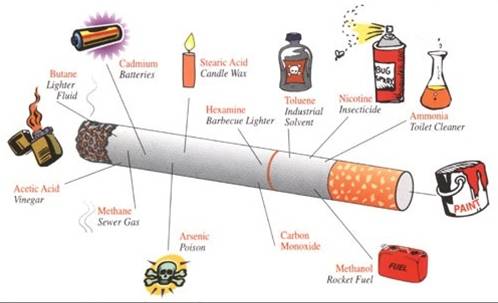
Is your local gas station attendant a drug dealer? Most people would say no, yet he readily deals all day long with customers looking for their next nicotine fix. Nicotine, the addictive substance in tobacco, keeps its users hooked.
Even though most people do not consider tobacco to be a drug, this post will show that it is exactly that. Tobacco delivers similar neurobiological effects as illegal substances like cocaine, methamphetamine and marijuana, all more commonly associated with the word “drug.” With tobacco, however, advertising and the law contribute to the common perception that tobacco is not a drug.
Tobacco Products
Just like on the street corner, where you might be able to buy crack, marijuana or meth, a gas station offers different types of drugs. Tobacco itself comes in many forms: dip, snuff, cigars and, of course cigarettes.
Chewing tobacco or “dip” is a smokeless form of tobacco, which when packed into the lip allows nicotine to flow into the bloodstream via the gum line. Snuff, a finer form of tobacco, is snorted while cigarettes are smoked. Both provide an alternative way to get a nicotine high.
The ways in which these tobacco products are consumed mirror the techniques of cocaine consumption – coca leaves are chewed, cocaine is snorted, and crack is smoked. So how is tobacco different?
And just like marijuana tobacco is grown in the ground, picked and dried, and then rolled into cigars and cigarettes. Tobacco has nicotine while marijuana has tetrahydrocannabinol (THC). Both are responsible for getting the user high.
Plenty of mind/brain posts in this week’s Encephalon: Big Night, so the top list is focused on social issues. After that, I just take care of business – brain, animals and anthropology.
Top
Susan Blum, Should China Copy the West on Academic Integrity?
Researcher of truth in China and plagiarism in the US examines cultural notions of originality and due credit and their effect on academic practice and policy: “an academic system where people were hired and rewarded on the basis of contacts, seniority, and cooperation rather than publication and competition.”
Adrian Ivakhiv, Lakoff’s Environmental Frames vs. Connolly’s Resonance Machines
Cognition meets the environmental movement – neuropolitics results. Lakoff over-simplifies, and Ivakhiv brings in William Connolly to examine actual interactions, not just embodied frames.
I really liked this line, “communicating this idea of a social nature in a culture that still sees nature as “out there” somewhere and culture as “in here” among us humans, is not easy, as it goes against the grain even of what a large part of the American conservationist community has traditionally said (and celebrated), i.e., that nature is in our national parks, not in our homes or schoolyards.”
For more from the Immanence blog, see the post Robert Brulle’s Response to Lakoff.
EcoTone, Citizens First, Scientists second: The Argument for Advocacy
A new paper argues that scientists can be activists too through advocacy – in other words, questioning not the scientific method but the stand-off ethos that is often cultivated
Julia Douthwaite, Homo ferus: Between Monster and Model
Our images of the “wild man” – a savage, an innocent archetype, and defining what it meant to be human in the 18th century
Norman Holland, Has Psychology Become One of the Humanities?
Endless publications and not much advances in understanding – narrow efforts and the unscientific nature of the mind itself don’t add up to cumulative, generalizable knowledge. Ars Psychiatrica takes on Holland, offering more a view from the humanities – “consciousness is inherently a dynamic entity, and one engaged in essential value discrimination, on its own and in relation to other minds. The latter is the humanistic endeavor, and when it comes to the mind regarding itself, the stakes are highest of all.”
David Dobbs, Pharma Objects to Empiricism
The latest in how Big Pharma aims to control both basic research and policy to our own detriment – very good piece over at Neuron Culture
Brain
Vaughan Bell, All Smoke and Mirror Neurons?
Love the title! And it’s a perfect fit, as Mind Hacks discusses a coming article that takes on the hype and the actual research around mirror neurons
But in the long run these drugs are probably gonna catch up sooner or later
But fuck it I’m on one, so let’s enjoy,
let that X destroy your spinal chord, so it’s not a straight line no more
So we walk around lookin like some wind-up dolls,
shit stickin out of our backs like a dinosaur,
Shit, six hit’s won’t even get me high no more,
so bye for now, I’m gonna try to find some more
Drug strewn lyrics and references are found in much of today’s popular music. What effect do these words have on the average listener? Would you let your 10 year old listen to this? Why not… they’re just lyrics right?
School House Rock: Monkey Hear, Monkey Do? John Markert: Two Schools of Thought
1) Reflection Theory : “Music is popular because it reflects the values and beliefs of those who consume it.” Proponents of Reflection Theory examine cultural forms such as music lyrics to gain insight into social beliefs. Here music is used to probe the connection between society and culture. Supporters of this intellectual tradition see the audience consuming with a critical eye, selecting songs because the theme relate to them and their world.
2) Arnoldian Theory : “Music is didactic and acts as a socializing agent by teaching behavior.” The concern by those at the other end of the intellectual tradition is that song lyrics may teach inappropriate social behavior. Mathew Arnold laid the foundation for this perspective in the last century, and his initial assessment continues to remain popular.
This is where the real debate can begin. Are the music and lyrics of songs with drug, alcohol, sex, and violence references putting adolescents at a greater risk of alcohol and drug use? Or is it simply the culture that these songs and music are created and engulfed in?
Pros and Cons of the Two Schools
One can make a case for both opposing ideologies. On the one hand, it is easy to see how the music and general lyrics can influence adolescents into using drugs and alcohol. For example, when browsing for songs that contain any type of alcohol or drug reference it is not hard to find hundreds of songs that contain one if not both. “White Lines”, “Fight for Your Right to Light the Bong,” and “Crack Monster” are just a few of the songs that diminish the dangers and actually commemorate the use of drugs and alcohol.
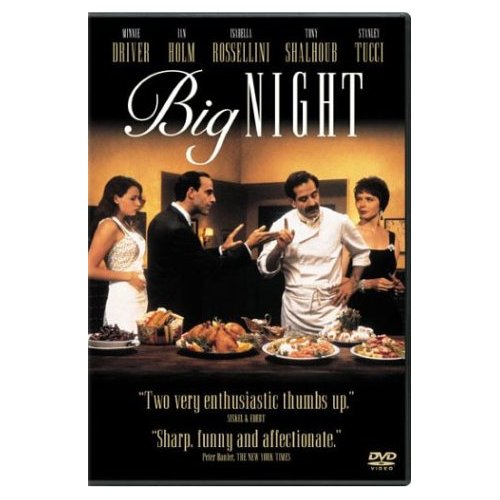
Welcome to Encephalon #71 – a Big Night here at Neuroanthropology, as we are hosting Encephalon for the second time (last year it was The Usual Suspects). Enjoy your multi-course mind feast!
Editor’s Selections What is this: ‘Too much’? HEY! It is never ‘too much’; it is only ‘not enough’! Bite your teeth into the ass of life and drag it to you!
For more on the 1996 film Big Night, you can see the IMDb site and Wikipedia. The quotes (with occasional slight modifications) were taken from two sources: IMDb and MovieQuotes.







 Neuroanthropology