Charles Whitehead: Social Mirrors

In the depths of the Bad Semester (how I now refer to the last four months), Dr. Charles Whitehead contacted me to share notes on neuroanthropology. I’m trying to catch up with the immense backlog of material I need to work through, but I thought I would post a short note and a link to his website, Social Mirrors. It’s a pretty interesting spread of thinking, and Dr. Whitehead has provided numerous links to his papers and other material.
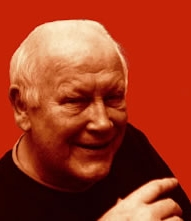
Dr. Charles Whitehead

I especially like his piece with Prof. Robert Turner, downloadable here, on the effects of collective representations on the brain. In particular, the Turner and Whitehead article argues that the idea that certain areas of the brain are networked into a ‘social brain’ — implying that the rest of the brain is ‘not social’ — is hard to support. I’ll admit that I don’t necessarily use the same language or conceive of how the brain works in the ways described by Turner and Whitehead, but it is well worth the read to check it out, if for no other reason that it provides a corrective to some emerging ways of theorizing brain enculturation.

Turner and Whitehead take the multiple senses of the word, ‘representation,’ especially the conflicting use by anthropologists and social scientists, on the one hand, and brain sciences, as a point of departure. Normally, I just find the overlap annoying and have argued that it is one reason that anthropologists don’t ‘get it’ when it comes to neurosciences (for example, in Beyond Bourdieu’s ‘body’ — giving too much credit?). But Turner and Whitehead have something more constructive to say about the unstable term (from their conclusion):

Continue reading “Charles Whitehead: Social Mirrors”

Monday Morning Artist: Sam Mangwana

The second in this occasional series, the featured artist today is the Congolese musician Sam Mangwana. He is one of the leaders of the Soukous genre, derived from the French “secouer” (to shake) and once known as the African rumba. That means it’s fun! I also find it fascinating how it mixes African and Latin rhythms and sound together.

This YouTube clip is just the music really, not much video, but it’s a great tune with Franco and TPOK Jazz.

If you like that, the best place I’ve found to listen to some of Sam Magwana’s music is over at Rhapsody.

Calabash Music, with the tag “Tune Your World,” also provides a list of some of Mangwana’s music, including short clips. Calabash gives a bio as well:

In his early years, Mangwana formally studied music as a member of the Salvation Army Chorus. While in his mid-teens, Mangwana began his professional career. At age 17, he became the lead singer of the group ‘Tabu Ley Rocherau’s Africa Fiesta’, in addition to singing with the band for over 10 years, Mangwana appeared with other popular Soukous bands. In 1976, he formed his own band called the ‘African All Stars’, in 86′ their single “Maria Tebba,” became a huge soukous hit. He sings in seven different languages, both African and European and has toured extensively inside and outside Africa, justifying his tag as the ‘International Sam Mangwana’ and the ‘Pigeon Voyager’. Mangwana serves up a blend of Cuban and Congolese sounds, seamlessly fusing them together. Mangwana’s style is referred to as the Congolese Rumba because he deftly takes Cuban styles and puts any number of Congolese (or Mangwanese) twists to it.

For more, you can look at Mangwana’s albums on Amazon. And here’s the unofficial Sam Mangwana website.