Neuroanthropology

For a greater understanding of the encultured brain and body…

Archive for April 26th, 2008

More on Brainbow

Posted by dlende on April 26, 2008

Since I posted Jeff Lichtman’s Brainbows, with all those wonderful images of the fluorescent brain, I’ve gotten questions from people about two basic things: first, how do they get those colors? and second, how do they get those images?

For the colors, genetic recombination techniques are used to insert pigment-expressing genes into the genomes of developing mice. The cool part? Those extra genes come from coral and jellyfish. The red color comes from coral, while the blue and cyan come from modifying a fluorescent green pigment in jellyfish.

For the images, the fluorescent hues only appear under fluorescent light. The Lichtman group has used two techniques, both using confocal microscopy (focused image taking, rather than a normal broad view from a typical microscope). First, brain slices are taken from mice and then examined in the lab. Second, for live shots, the Lichtman group works on the “neuromuscular junctions in a very accessible neck muscle in mice,” which permits taking a series of images over several days.

In the older post I blogged on how Lichtman’s approach to his research is reminiscent of what we try to do here—a naturalist concerned with the processes, mechanisms and connections of life and an understanding of the power of observation. But here I want to point out why these techniques are powerful. First, they permit an understanding of neuronal arrangements and connections through the greater discrimination provided by the many different colors. The image below from the original Nature article shows the differences between neuronal patterns in different parts of the brain.

Second, using computers to create 3-D videos from 2-D images, this research gives us maps that permits us stereoscopic humans to actually see fields of neurons as they are structured in the brain. This too represents a major advance over older images. So enjoy the video!

Finally, for your viewing pleasure, a composite image of brainbow pictures.

Posted in Brain imaging, Brain Mechanisms | 1 Comment »

Darwin Online

Posted by dlende on April 26, 2008

Sue Sheridan, my colleague here at Notre Dame, has a post Darwin in His Own Words on her blog, Life of Wiley. I recreate it below since both the NPR story and the online link to Darwin’s works are great.

Darwin in His Own Words
There was a very interesting piece on NPRs Morning Edition about the new Darwin Online Project. They have made all of his writings, notes, letters, etc. available for free. Including free downloads of his books. Pretty cool. Apparently the site has been swamped with hits. Take that creationists!

As the Darwin Online site says, they got 7 million hits on April 17th. Wow! It should prove to be a great resource.

The New York Times also has an article on Darwin, What Darwin Saw Out Back. It covers the new exhibition at the New York Botanical Garden recreating Darwin’s experimental and observational work with flowers.

Here’s a relevant bit:

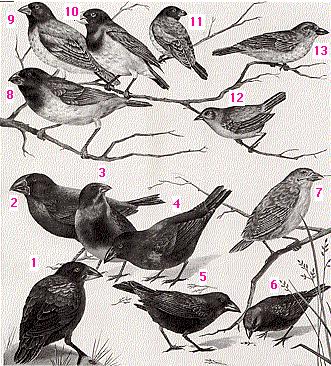
Though most people associate that book and Darwin’s ideas generally with his voyage to the Galápagos and his study of finches there, his work with plants was far more central to his thinking, said David Kohn, a Darwin expert and science historian who is a curator of the exhibition… “He was fascinated by plants,” particularly the way their variation and sexual reproduction challenged the idea that species were stable, a key idea in botany at the time. As Dr. Kohn writes in the exhibition catalogue, “plants were the one group of organisms that he studied with most consistency and depth over the course of a long scientific career” of collecting, observing, experimenting and theorizing. But Darwin studied more than flowers. He was intrigued by what Dr. Kohn calls the “behavior” of plants — how they move, respond to light, consume insects and otherwise act in the world.

Now if they would only do an exhibition on Darwin’s impressive work on molluscs to go along with the flowering plants and the Galapagos finches.

Posted in Evolution | Leave a Comment »

 
Follow

Get every new post delivered to your Inbox.

Join 134 other followers